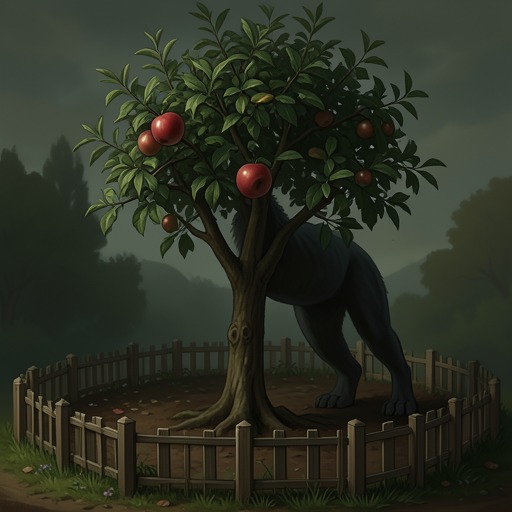
Jadis's immortality
The Magician's NephewJadis’s immortality is the consequence of eating the garden’s fruit against its proper purpose: she gains unwearying strength and endless days, yet the gift preserves rather than reforms her evil heart. As Aslan explains, the fruit’s power remains real, but its misuse turns longevity into prolonged misery.
The Gift and Its Cost
Aslan identifies the source of Jadis’s condition in the fruit she plucked and ate at the wrong time and in the wrong way. The fruit itself is good, but those who take and eat it improperly come to loathe it ever after. Its power does not simply vanish because the act was wrongful: Jadis has won the desire at the center of the temptation, receiving strength that does not tire and days without end.
That endurance is no promise of contentment. Aslan says that a long life joined to an evil heart is only a lengthening of misery, and that Jadis is already beginning to understand the cost. Her immortality therefore joins an extraordinary physical benefit to an inward consequence: she keeps the power she sought, but cannot make that power a source of happiness.
The Fruit’s Unaltered Nature
The scene stresses that the fruit always works; its effect is not cancelled by the eater’s manner of taking it. Instead, the result follows the fruit’s nature while the wrong use determines the character of the experience. Jadis receives lasting strength and life, but the same act leaves her with a lasting aversion to the fruit and an existence in which evil continues to shape her days.
Aslan distills this consequence into the principle that people may obtain what they want without liking what they receive. Jadis’s immortality makes that reversal concrete: the desire is fulfilled, but its fulfillment exposes the misery bound up with the way she pursued it.